The Life Span of an Erythrocyte Is About
Averages approximately 1-2 years. Males have roughly 54 million erythrocytes per microliter of blood while females have approximately 48 million.

Haematology Red Blood Cell Life Cycle Youtube
Aging of the red cells is associated with a decrease of the enzymatic activities a progressive increase of hemoglobin concentration and red cell viscosity due to loss of total cation and water content dense red cells and structural modifications of the membrane with a reduction of the surfacevolume.

. SHARP Fromthe DepartmentofHaematology Radeliffe Infirmary Oxford SYNOPSIs Redcells derived from 13 patients with iron-deficiency anaemia were found to have a normallife span in the patients owncirculations and those ofnormalvolunteers. The life-span of the erythrocyte J Physiol. Most numerous type of T cell.
Asked Jan 8 2021 in Nursing by Wayuvan. This article will focus on erythrocyte histology in order to explain the structure functions and life cycle of these cells. Reduction in blood oxygen levels causes kidneys to increase output of EPO to stimulate production of more red blood cells.
6 Hb F has a tendency to denature and damage the membrane from within contributing to the shortened the red cell lifespan. Authors D A SUTHERLAND P MINTON H LANZ. The average life span of circulating erythrocytes is about 120 days.
The life span of the rabbit erythrocyte. Erythrocyte life span of less than 120 days ineffective bone marrow response to erythropoietin and altered iron metabolism describe the pathophysiologic characteristics of which type of anemia. Stimulate the activity of other T cells.
The life span of an erythrocyte is about ___ days and once matured an erythrocyte has a _____ shape. Average lifespan of a red blood cell. Life cycle of Erythrocytes.
Is the life span of a red blood cell due to wear and tear on its plasma membrane. Their mean adult red blood cell life span was 564 7 d range. These degraded red blood cells are filtered by the spleen and.
Averages about 5-7 days. Asked Jan 8 2021 in Nursing by Wayuvan. Erythrocyte life span of less than 120 days ineffective bone marrow response to erythropoietin and altered iron metabolism describe the pathophysiologic characteristics of which type of anemia.
Among individuals the mean lifespan varies by approximately 15. Have a long life span. Every day about 1 of red blood cells die or are degraded in the bloodstream.
Comparing the life span of avian erythrocytes with those of other animal species the rate of red cell turnover in the mammals birds and reptile turtle was found to correlate directly with basal heat production per kilogram. This cell is released into the blood stream and circulates there for 1 to 2 days before it is developed into a mature RBC erythrocyte. Respond quickly to the presentation of the same antigen at a later date.
Erythrocytes are highly deformable and. Averages about 120 days. Worn-out erythrocytes are phagocytized by macrophages and their hemoglobin is broken down.
As discussed below there are circumstances in which even this relatively small normal variation can be. The reduced erythrocyte life span of normal newborn red cells 70 to 90 days as opposed to 120 days in the adult Pearson 1967. Erythrocytes life cycle involves three stages production maturity and destruction.
Author J N MILLS. Fetal hemoglobin is also more soluble in strong phosphate buffers and is. MeSH terms Erythrocytes Microbial Viability.
The life span of the rabbit erythrocyte Acta Haematol. Erythrocytes live only 120 days on average and thus must be continually replaced. The life-span of the erythrocyte.
The maximum life span of the chicken erythrocyte was found to be 35 days of the pigeon erythrocyte 35-45 days and the duck erythrocyte 42 days. Is the same amount of time that it takes one RBC to cycle once through the blood stream. Through the erythropoiesis which is the production of erythrocytes a sub-process of haematopoiesis occurs in the red bone marrow.
21065025 No abstract available. None of the above. The total life span of an erythrocyte.
The life span of the rabbit erythrocyte. Twelve of the 19 infants were followed until their autologus HbF levels were reached. In a normal individual with a mean RBC lifespan of 115 days this value may vary between 70 and 140 days 1 2.
The average life span of an erythrocyte is approximately 120 days which means that almost 1 percent of the bodys erythrocytes are destroyed and must be replaced every day. The mature erythrocyte remains in circulation for about 120 days before being engulfed and destroyed by phagocytic cells of the reticuloendothelial system. By far the most common formed element is the erythrocyte also known as a red blood cell or RBC.
Red blood cells have a lifespan of about 120 days. Examination of the throat in a child demonstrating signs and symptoms of acute epiglottitis may contribute to which life-threatening complication. 1962 15 346 Thelife spanoferythrocytes in iron-deficiency anaemia I.
Removing whole blood from body weeks before competition more O2 more energy 120 days. Vest et al 1961 contributes to an. Once they are matured an RBC remains functional in the bloodstream for about 110 to 120 days before it is degraded.
In contrast to the adult RBC lifespan of 120 days the lifespan of the neonatal erythrocyte is only 60 to 90 days with preterm infants having an even shorter life span of 35 to 50 days. In practice there is considerable variation in the lifespan of human RBC. Rupturing of the tonsils.
This amounts to 250 billion cells per day. Key facts about erythrocytes. What is the life span of an erythrocyte in days.
Thousands of erythrocytes and millions of erythrocytes make up a single drop of blood. After 120 days old RBCs are recycled by the macrophages of the spleen liver bone marrow and lymph nodes reticuloendothelial system. The life-span of the erythrocyte.
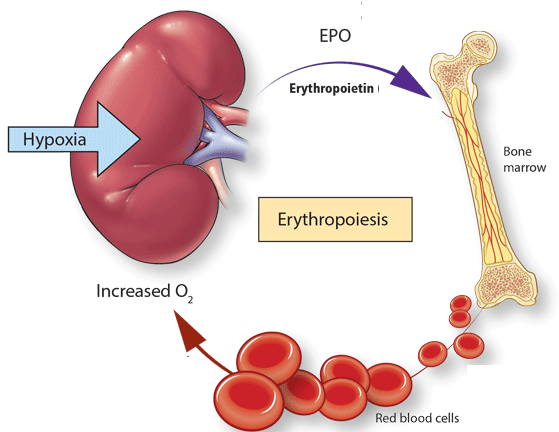
Erythrocytes Or Red Blood Corpuscles Structure Function Formation
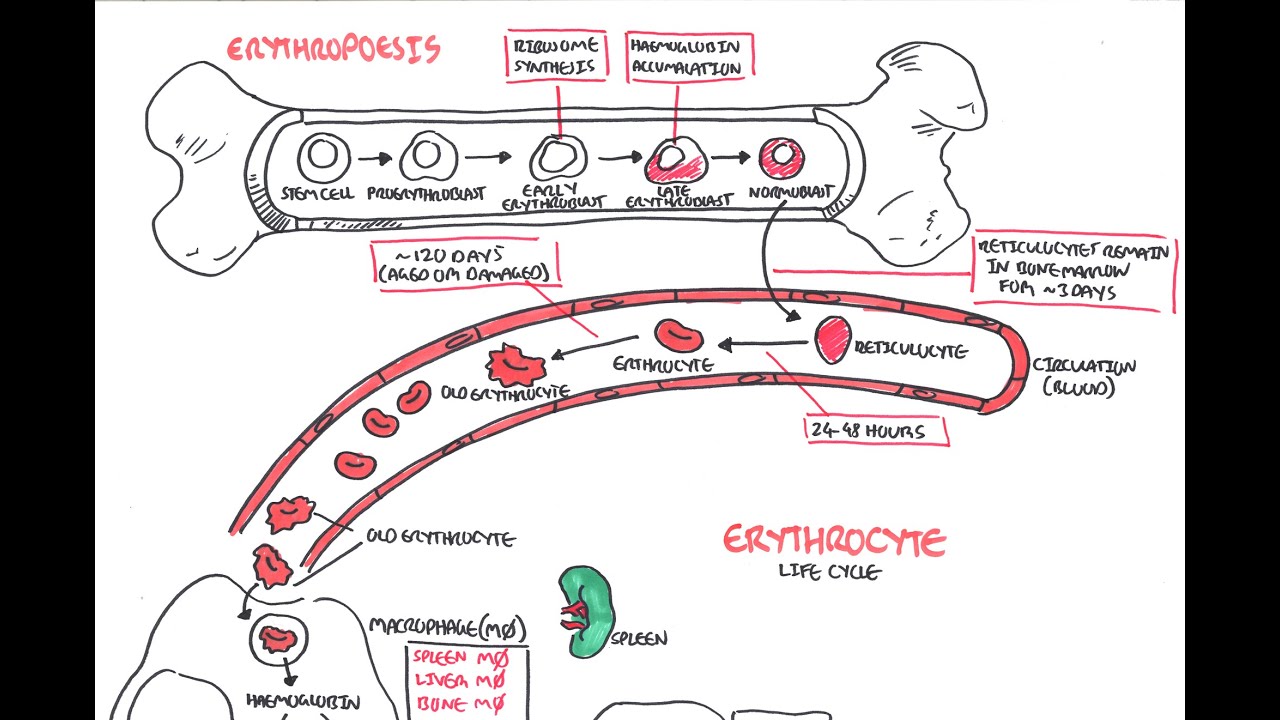
Haematology Red Blood Cell Life Cycle Youtube
Erythrocytes An Overview Sciencedirect Topics
No comments for "The Life Span of an Erythrocyte Is About"
Post a Comment